Taking Control of Goods Amendments – Q&A
Following the recent passing of the Statutory Instrument relating to changes in the Taking Control of Goods regulations, we have received a number of enquiries from clients seeking clarification.
To assist, we have set out below a concise Q&A covering the most common points raised.
If your query is not included, or you would prefer to discuss a specific case, please contact our team at BD@courtenforcementservices.co.uk.
Do the changes apply to existing cases?
No. The changes apply only to Writs of Control issued from 1st May 2026. Any cases issued prior to this date will continue under the existing regulations and fee scale, ensuring consistency and avoiding retrospective application.
Why are enforcement fees increasing?
The current fee structure has been in place since 2014. The 5% uplift reflects inflation over that period and is intended to ensure enforcement activity remains commercially sustainable, while preserving a clear and standardised framework.
What does the new fee structure look like?
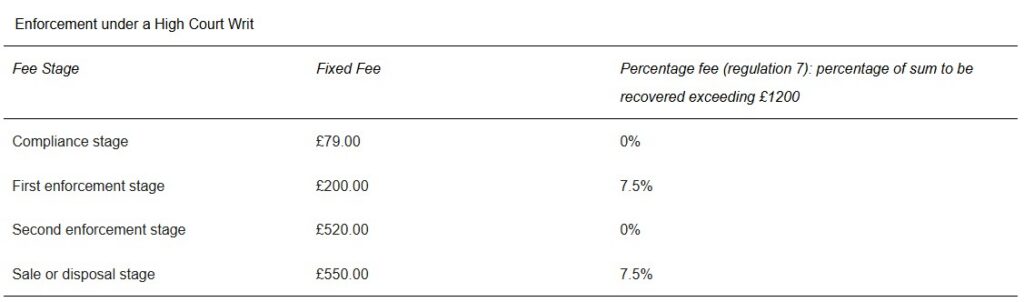
Will the abortive fee change?
Yes. The Creditor’s Guarantee Fee (commonly referred to as the abortive fee) is linked to the Compliance Stage fee. As a result, it will increase to £79.00 plus VAT. This forms part of the wider fee adjustment rather than a standalone change.
Is the court fee for issuing a Writ of Control changing?
No. Court fees sit outside the Taking Control of Goods Regulations. The fee for sealing a Writ of Control remains £80.00.
Will cases take longer to progress?
The Notice of Enforcement period will increase to 14 clear days. While this extends the early stage of the process, the intention is to encourage prompt engagement and resolution. In many cases, this may reduce the need for escalation and improve overall efficiency.
What do the changes mean for vulnerable debtors?
The updated regulations place greater emphasis on identifying and supporting vulnerable individuals. In certain cases, the notice period may be extended to up to 28 days, allowing additional time to seek advice and engage with the process. This supports more considered outcomes and reduces the risk of avoidable escalation.
Will this impact recovery rates?
There is no clear evidence to suggest a reduction in recovery rates. While timelines may extend slightly, the increased focus on early engagement and structured communication is expected to support sustainable repayment outcomes. Strong case management will remain key.
How should creditors respond?
Creditors should plan for slightly longer enforcement timelines and adjust expectations where needed. Early instruction, clear communication, and close coordination with enforcement partners will be increasingly important to ensure cases progress efficiently under the new framework.
Summary
- The changes apply to new Writs of Control issued from 1st May 2026 only
- Enforcement fees will increase by 5%, including the abortive fee
- The court fee remains unchanged at £80.00
- The compliance stage is extended, which may slightly lengthen timelines
- Greater emphasis is placed on early engagement and vulnerability considerations
The full amendments to the Taking Control of Goods Regulations can be found here.
If you would like further information, contact our Business Development Team directly: bd@courtenforcementservices.co.uk